
by Haley Wakelam
Is everyone planning a trip to Japan?
If we are to believe the internet, everyone is traveling to Japan. This seems especially true of millennials approaching mid-life crisis who, as one popular Reddit meme would have it, are training for a marathon, purchasing their first airfrier, showering their growing house plant collection with love in lieu of children, and planning a trip to Japan, in no apparent order. The numbers don’t argue otherwise. Since the early 2010s, overseas residents' visits to Japan have nearly quadrupled, and in 2025, international visitors surpassed 40 million for the first time.
When I mentioned this apparent surge in popularity of Japanese tourism - especially, as some would have it, among Gen Z and Millenial men - to Kerry Smith, Professor of History and East Asian Studies at Brown University, he didn’t bat an eye.
“That’s still a thing? Cause that’s not new.”
First, there was silk
Professor Smith is right. After all, Soie, adapted from Alessandro Barrico’s 1996 novel Seta, tells the story French silk merchant’s Hervé Joncourt’s back-and-forth travels to Japan over the course of the 1860s. And as audience members are soon to witness, it is decidedly not, or not only, the procurement of silkworm eggs that keeps him returning.
Japan has long loomed large in the Western imagination. Few material objects better encompass the history of that fascination, together with the geopolitical tensions belying it, than silk.
For millenia, the origins of silk production, known as sericulture, remained mostly shrouded in mystery. Silk, which is produced from silkworms fed almost exclusively a diet of white mulberry leaves, evolved in Eastern China some 2,000 years ago, traveling east to Korea and Japan around 300 CE and west through Central Asia and eventually Europe across the famous Silk Road until the late 14th century.
That the luxury good lent its name to the eponymous trade route, perhaps one of the pre-modern world’s most impressive logistical feats, is no surprise. As it turns out, silk has been the driving force behind several world-altering developments over the centuries.
After sericulture’s arrival in Europe in the 15th century, its ensured longevity became the subject of intense scrutiny for silk-producing centers like France’s Lyon. Famously, an outbreak of the disease pébrine that decimated Europe’s silkworm population in the 1850s lent credence to Louis Pasteur’s emerging germ theory, largely credited for saving the European silk industry. Less well known is how interchangeable punchcards used in the Jacquard Loom, patented by French inventor Joseph-Marie Jacquard in 1804 to mass manufacture silk, did more than to fuel Western Europe’s revolution in textile manufacturing that we now recognize as the stirrings of industrial empire. In case you’ve so far wondered so what about silk’s relevance to your own life, those punchcards are now widely considered a precedent of modern computing.
The history of silk, then, is sinuously interthreaded with the history of life as we now know it.
-Savez-vous ce que c’est ?
-Affaires de femme.
- Erreur. Affaires d’homme : de l’argent
Soie
Women’s work and western wars
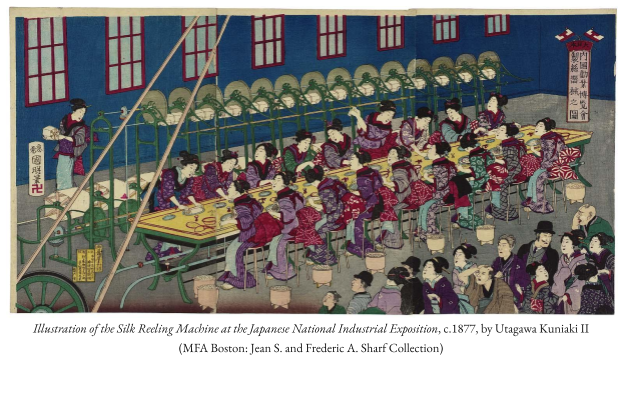
Et Japan, alors ? Japanese sericulture was, according to Professor Smith, a surprisingly egalitarian practice and a secondary form of income for many rural families. The hypervigilant tending of silkworms was also, unsurprisingly, gendered work.
“Any family could raise silkworm eggs on mulberry leaves. But the feeding and the cleaning, which at peak is pretty much a 24-hour-a-day job, any signs of contamination and hygiene, that was entirely women's work.”
By the time Soie’s protagonist travels to Japan in the 1850s, the little understood disease pébrine was decimating European silkworms by the droves. As Professor Smith explains, the need to procure Japanese silkworm eggs conveniently coincided with American naval commander Matthew Perry’s “opening” of Japan to the West in 1854, forcing Japan’s hand in an end to the nation’s centuries-long isolationism.
“None of [the opening of Japan’s domestic markets] was willing, this was all the product of gunboat diplomacy. Japan fought tooth and nail not to open ports to trade for as long as it could because there was no advantage to them in disrupting the status quo.”
“A veritable cult of japonisme…”
And in Europe? The mass importation of Japanese material culture following the “opening” of Japan gave rise to what the art historian Colta Feller Ives calls averitable cult of japonisme in late nineteenth century France. Cassat, Manet, Toulouse-Lautrec and others sought to recreate the “blatant flatness” and democratic subject choice of traditional Japanese woodblock prints, known as ukiyo-e, in everything from their imitative experimentation of color to the position in which women subjects were depicted.
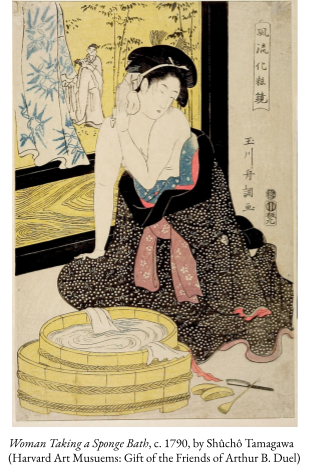
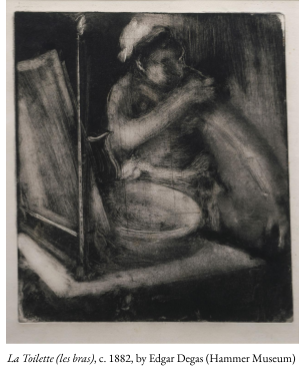
On the topic of women, I ask Professor smith to what extent contemporary japanophilia continues to bely a fascination with traditional Japanese gender roles, sometimes bordering on the fetishistic.
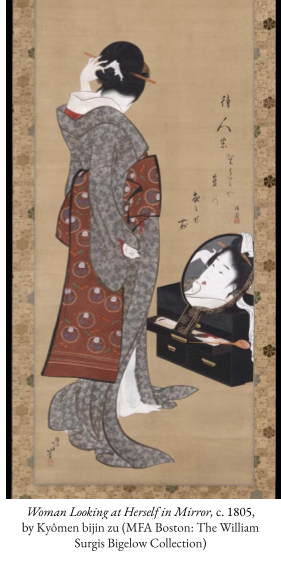
“For a long time it was the samurai, the geisha, you know, feminized Japan versus the masculine version. Now there’s some resurgence of the samurai because they're supposedly economic warriors and this huge threat.”
Literary critism of Alessandro Barrico’s Seta has tended to emphasize how the novel is unselfconsciously awash in this same language of otherness that by now is well known to characterize a sub-genre of European male travel narrative. As one literary critiq remarks, Barrico is simply too good a writer to not know what he was doing by dealing in pronounced stereotypes. To the careful reader, the novel seems to ask: who, or rather what, is the novel’s protagonist truly in love with if not, in some measure, his own vanity?
I ask Professor Smith how, or even whether, Japan was legible to his Brown undergraduate students, some of whom I warned may soon be planning their inaugural trip to Japan.
“I get the sense that Japan is most legible to them through popular culture, through animation. No longer so much as a producer of technology or goods. The samurai are still out there. You see that again with China in a more contemporary setting. The tropes, the vocabularies around otherness and around Asians in particular don't go away. They just get recycled.”
In a few short weeks, actrice Sylvie Dorliat will embark French Theater Project audiences on a different sort of trip to Japan. Like the diaphanous quality of silk itself, at once concealing and revealing the subtle curves of the body it adorns, Soie’s conceit is that it can only tell, never show what for audience members will be - can only be- a Japan that remains invisible to us.
Au plaisir de vous retrouver au spectacle.
-H.
I wish to thank Professor Kerry Smith for the generous gift of his time and insights.
