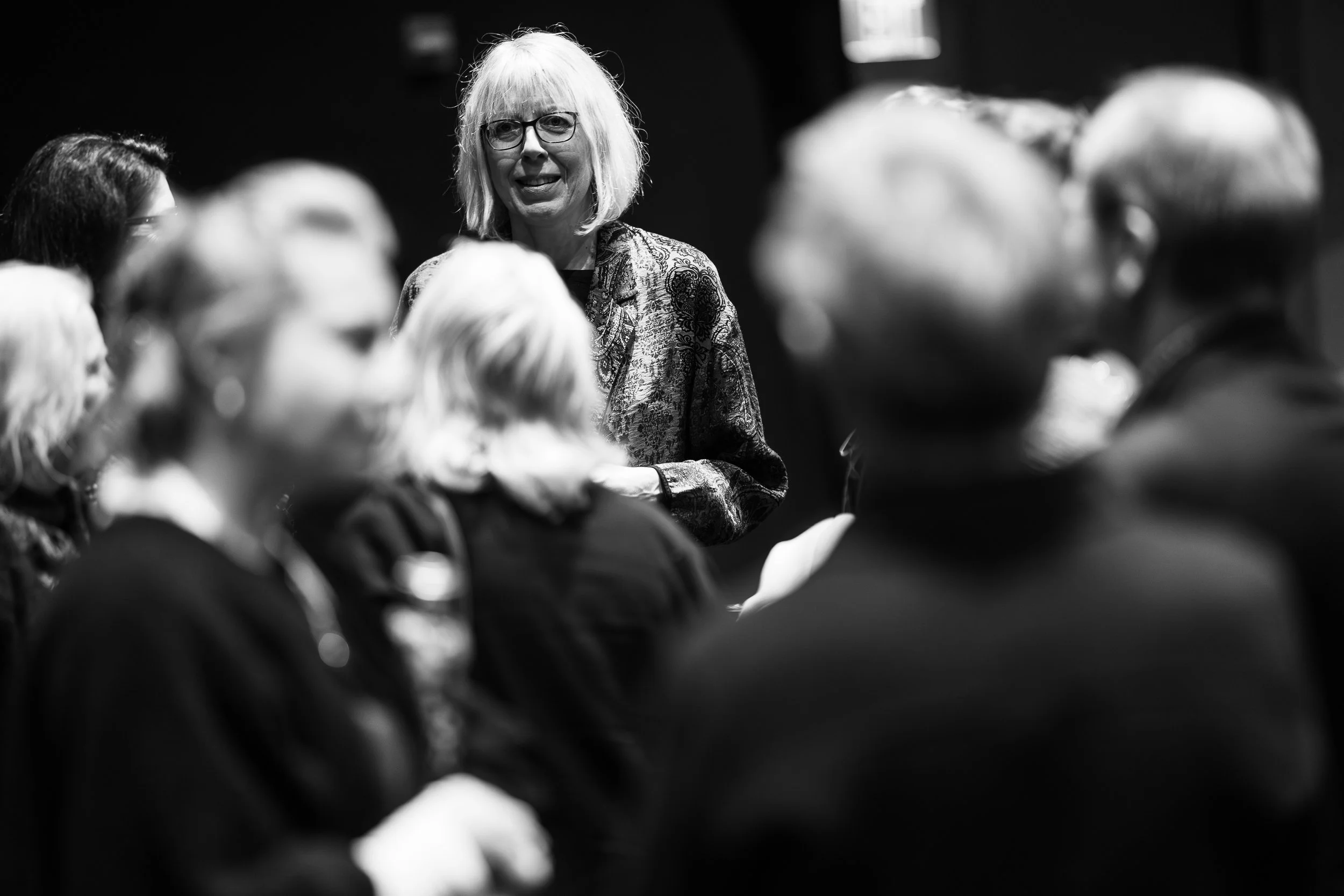
A post-show celebration of Soie and its audience
By Haley Wakelam
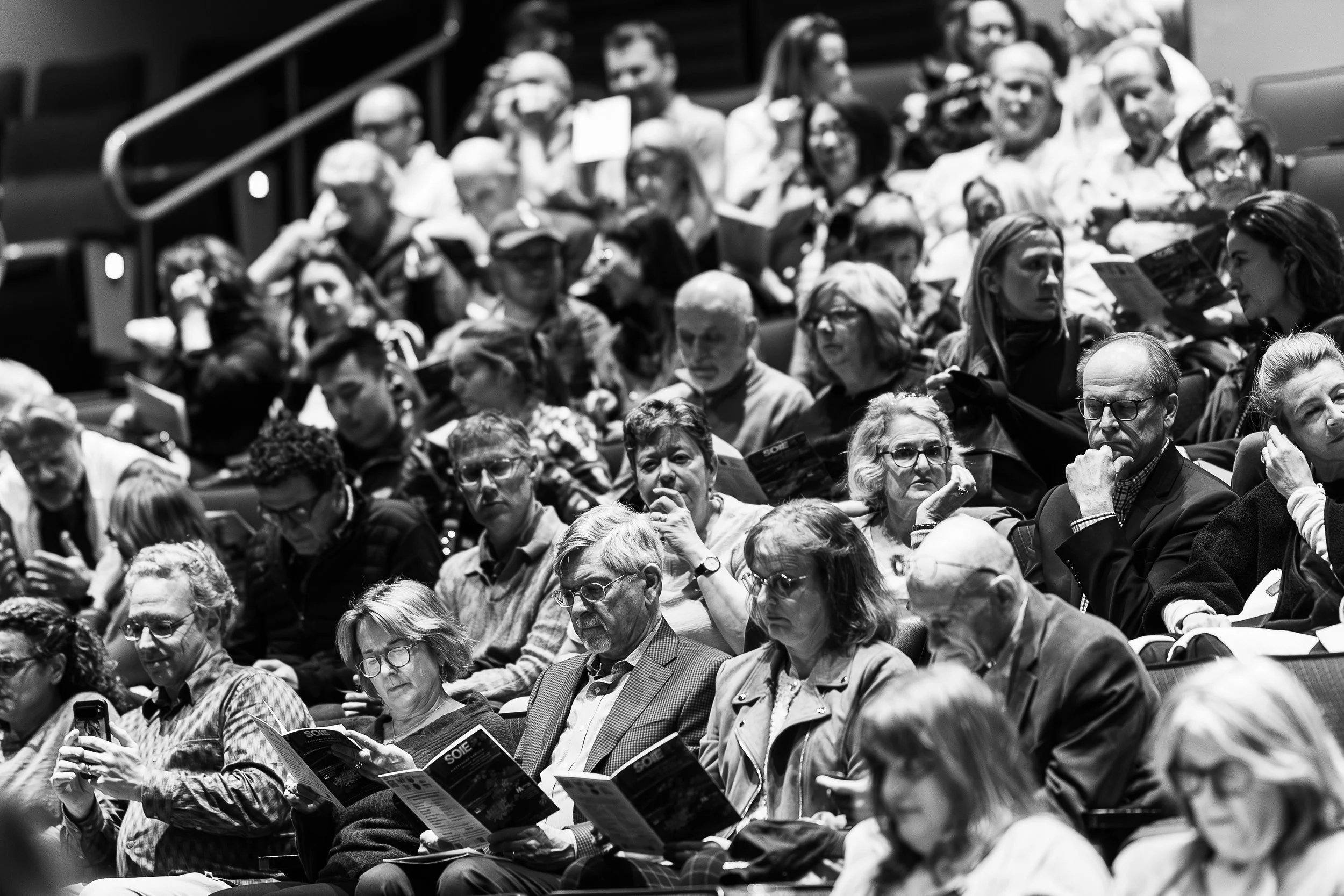
The arrivals began as a trickle, then came all at once. Fifteen minutes after the house opened for the Friday evening performance of Soie, the theater was buzzing with the raucous anticipation typical of any opening night crowd. But the experience of a French Theater Project opening night crowd is far from typical. From the audience, French, English, even snatches of Spanish could be heard intermingling in equally joyous profusion. Some audience members were seen to photograph their programs as if to say eh oui, du théâtre français ici à Boston ! Plenty of others shook hands across the aisles. Everyone seemed to know someone. Last minute arrivals who had successfully navigated their way out to Watertown, MA, could be forgiven as their fellow patrons generously stood to let them pass.
By 7:29, a hush had descended over the theater. Conversations were unnaturally steered to their conclusion as audiences braced for the decidedly unusual offering – only the French Theater Project’s fifth - that would begin at any moment.
« De toute façon, je fais mon spectacle. »
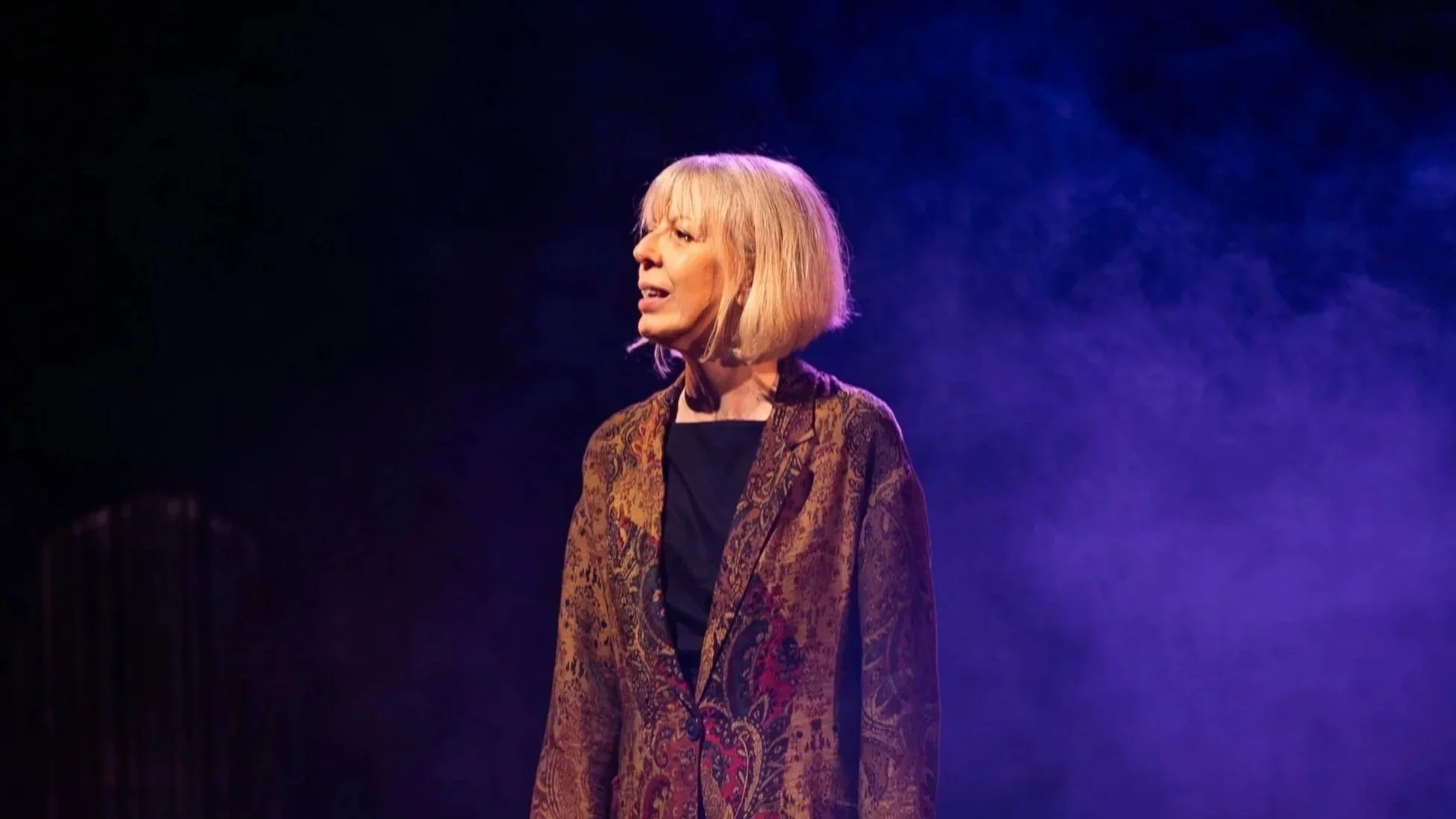
Backstage, Sylvie Dorliat sat quietly listening. “The most difficult part is waiting behind the curtain as people arrive, hearing the (bruissement) of their voices.”
Yet another challenge of performing a one-woman show? Not being able to abide the pre-show jitters with fellow actors backstage.
“I feed off of the audience’s excitements, mais quand même, thirty minutes can easily feel like an eternity. The challenge is to hold on to the excitement.“
It was her first performance state-side. In fact, Dorliat, who has performed widely in France, Belgium, Switzerland, and Luxembourg, had never performed before a not-entirely Francophone audience. She remained undaunted.
“I treat this as a performance like any other. De toute façon, je fais mon spectacle.”
“The thing I enjoy most is the people.”
As for French Theater Project founder David Miller, on Friday evening he was most likely to be found wearing a broad smile. He spends opening nights abrim with anxious energy, as this milestone can represent the culmination of one-to-two years’ worth of bureaucratic and logistical preparation spanning two continents. It’s the people, though, that make the opening night stakes so great. His focus is on the multilingual community he’s building at the French Theater Project and the basic joy of storytelling.
“For me, the thing I most enjoy is the people. In the days before opening night, it’s the actors, it’s making the theater together, sharing Boston with them. And then of course, it’s the folks that come. Many faces in the audience are familiar to me, but we get new people every time. People send me emails afterwards telling me about their pleasure at finding French theater here in Boston, however many years after they’ve left France.”
Not that he ever really gets to bask in the culmination of that effort on opening night, not yet. “It’s usually around the second show, after the lights go down and the play is five or ten minutes in, that I can begin to relax. I look around at the audience, and I start paying attention in the darkness - people’s reactions, people’s connection to the person they’re sitting next to. I just look around at the audience, at everybody engrossed in the story and I feel…delighted.”
“This was so unusual I had to see it.”
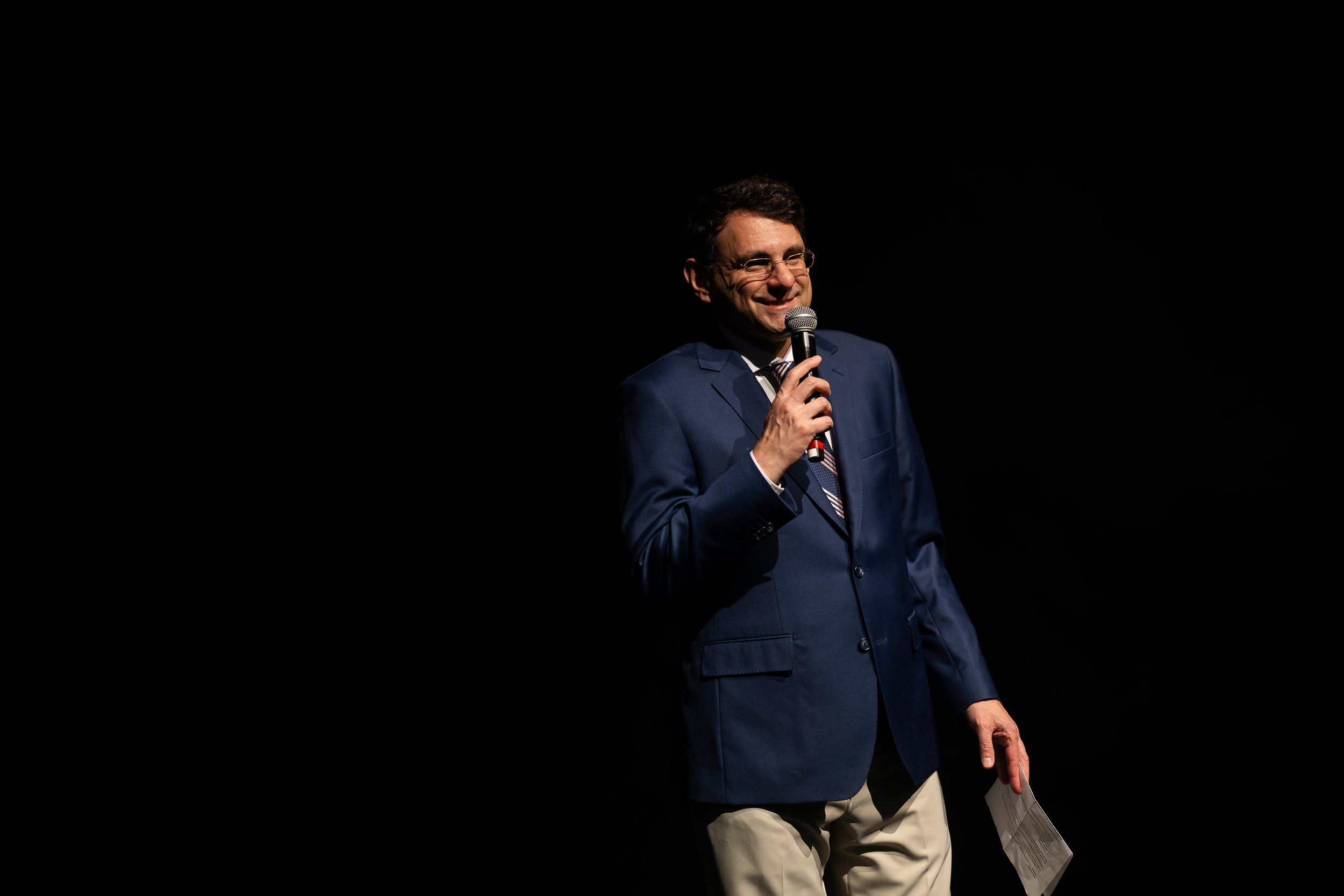
After David gave his curtain speech, it was showtime. For just under an hour and ten minutes, Dorliat led the audience through a poetic meandering of veiled motivations and elusive truths. Shifting postures, vocal register, and positioning on stage to bring to life no less than seven different characters, Dorliat did justice, seule, to an entire novel.
Audience member Patty Cassidy didn’t mince words. “The actress’s voice was everything. The way she used it for the different characters, and the tone of her voice and the emotions that it carried. I was totally swept away,” she said. When asked whether she is in the habit of attending theater often these days, Cassidy, who by her own admission speaks “un petit peu de français,” concedes that it takes a special type of production to earn her patronage. “I’ve lately become very careful with what I see, but this was so unusual I had to see it.”
The production was, she added, “beautifully staged” and the music was “perfect.”
It was the unusual nature of this piece, together with the exceptional talent of Dorliat, that initially attracted David. “Oh, she [Dorliat] is so strong, it’s remarkable. The gestures, the silences, the pauses, the range as she goes from one character to another.”
David knew the production’s aesthetic choices were likely to captivate audiences, too. “People have talked about how the lighting and the sound are elements they had not considered when they heard it’s a one-woman show. And they came away floored by the creativity of it all.”

Equally unexpected is the story itself, which by its end takes several tragic turns, only to conclude with a surprise reveal that leaves audiences with more questions than answers. Catching up with audience members Paul Chase and Isaias Saramiento after the show, both men spoke of the unresolved tensions in a story that, true to the original novel, operates through a series of short-lived vignettes that show, but never resolve, underlying tensions. Instead, the play entrusts any notion of truth to audience members to interpret for themselves.
“I thought it was a very tender play and sensual, of course,” said Saramiento. “There were some surprising things, things I still don’t understand. Like who’s that woman that he met in Japan?” Chase added that the play’s enigmatic tone overtly played into the trope of East Asian inscrutability. “The mystery of the east, you know, is ingrained in Western culture,” said Chase, “it’s the mysticism of it all.”
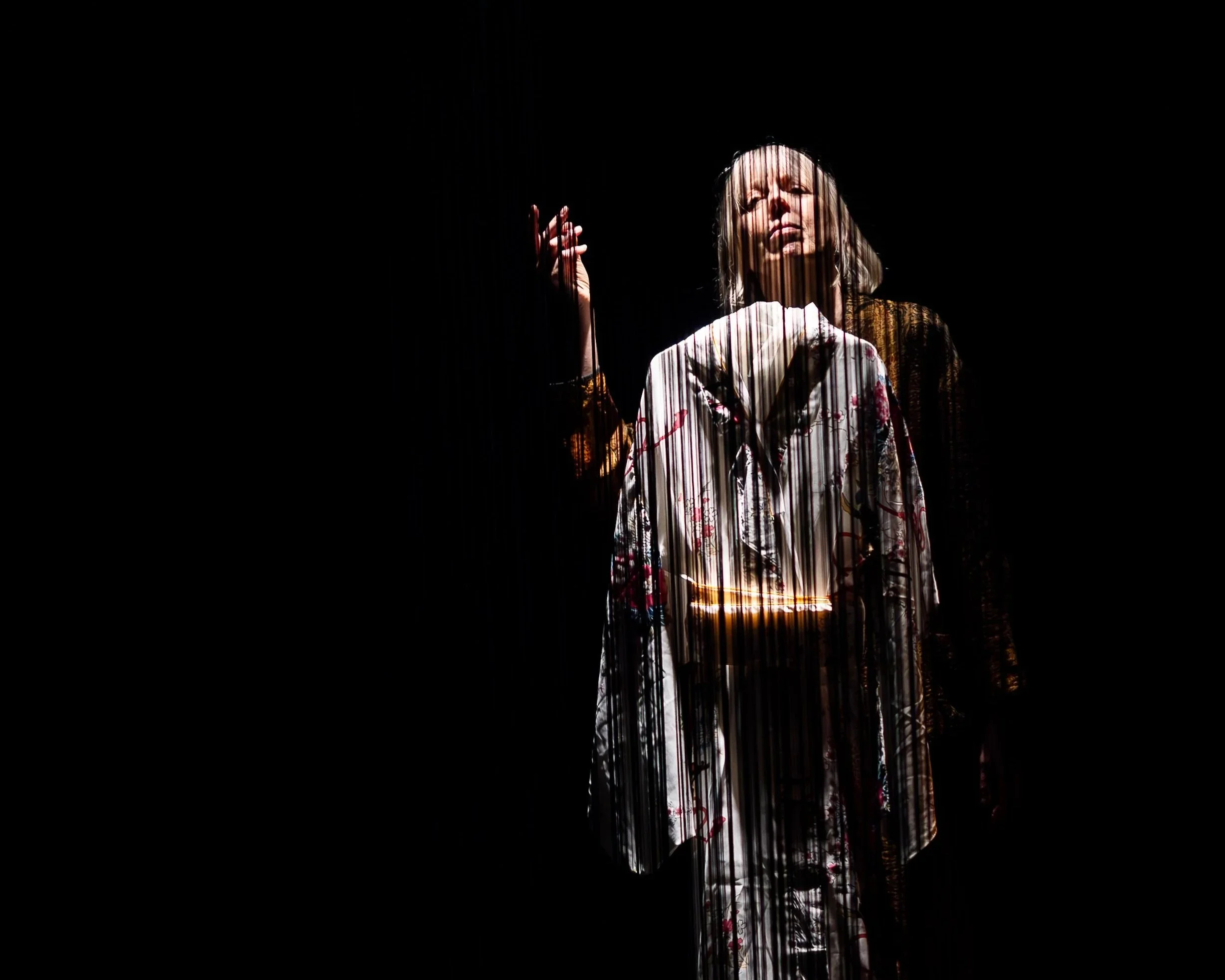
As for Dorliat, she could sense how deeply this Boston audience was with her throughout all three of the weekend’s performances.
“There was utter silence, the utmost attentiveness. When I spoke the line that the young boy was hanged, I heard an audible gasp. It gives me great pleasure to touch an audience in that way. On opening night, I even thought I heard the slightest sniffle at the end.”
Dorliat concluded: “Our connection existed, a bond was established. Enfin, the audience really existed for me.”