
Princeton’s Seuls en Scène Brings Avignon to Central Jersey
A Conversation with Seuls en Scène Artistic Director Florent Masse
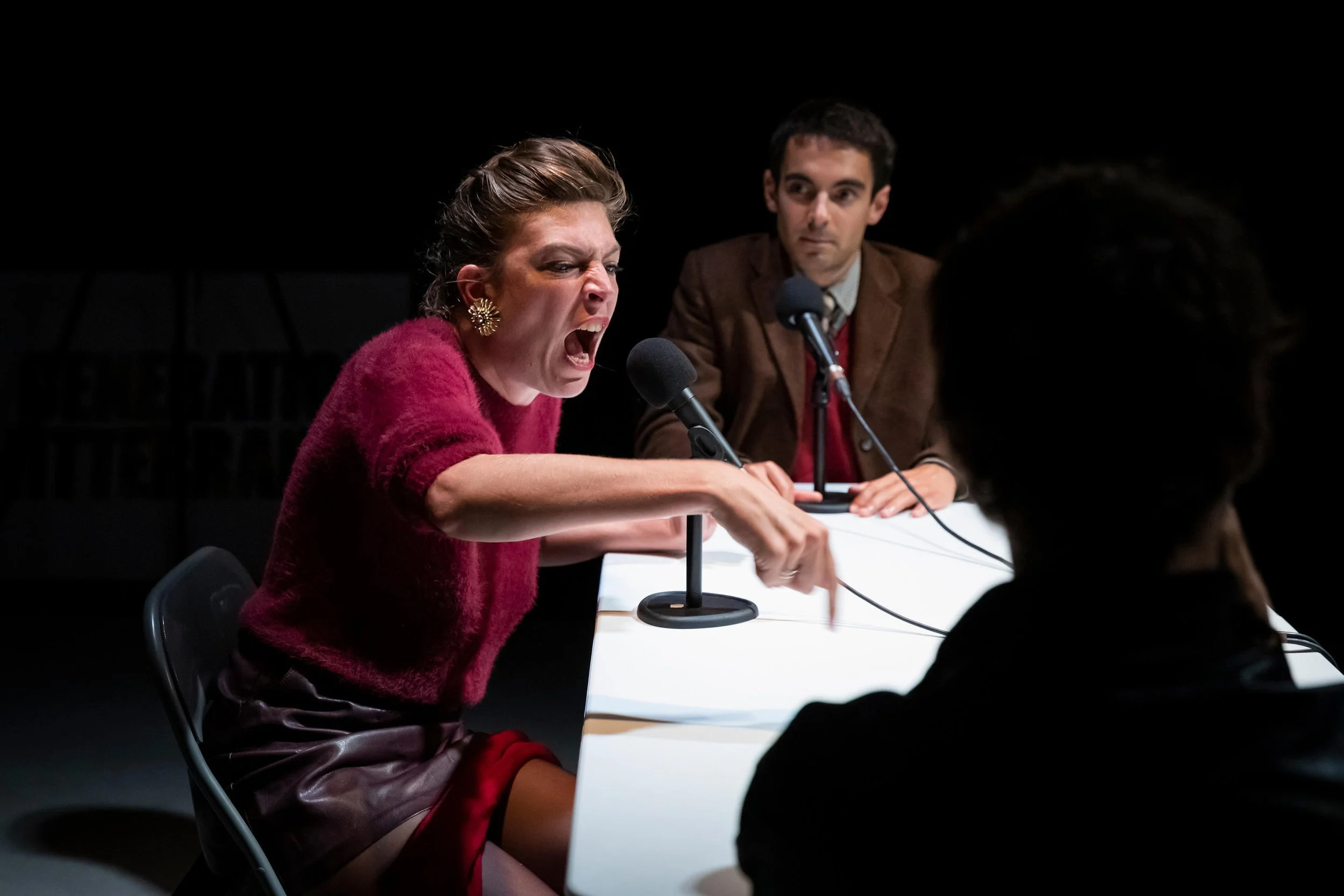
A Scene from Génération Mitterrand – Huit rois (nos présidents), Episode 2, one of this year’s selections. Photo Credit: Pauline Le Goff
Conducted and Edited for clarity by Haley Wakelam
This September 18th-26th, Princeton will host the 15th edition of Seuls en Scène, an annual French theater festival renowned for bringing celebrated French actors and directors, as well as promising early-career artists, to present their work on Princeton’s Campus. Over the years, Seuls en Scène has helped introduce American audiences to dozens of dynamic and engaging French productions. I had a chance to speak with Artistic Director Florent Masse, who first created the festival back in 2012, to discuss the challenges and merits of bringing French theater to the US, and what he’s looking forward to in this festival’s iteration.
H: Florent, you’re known for wearing many hats. Among them: Professor of the Practice in the Department of French and Italian at Princeton University, trained actor, Artistic Director of Seuls en Scène, and as of recently, Officier de l’Ordre des Arts et des Lettres.
How would you like to introduce yourself to our readers?
F: I'm a Franco-American educator, a producer, and a director as well. I have all these hats and they all make sense to me, you know, the three things: educating, teaching, directing. And also, of course, producing, bringing French theater to the US through Seuls en Scène.
H: In a previous interview with French Morning, you mentioned that Americans are accustomed to a different kind of theater than the kind you like to bring to Seuls en Scène.
I wondered if you could speak to what you envision as the differences in French and American theater, and perhaps more broadly, French and American forms of consuming entertainment.
(…)
That's a big question.
F: When American students, and American audiences in general, think about theater, they will dress up. It's an event. There’s a lot of expectation. If it’s a musical, the technical aspects are quite developed: the music, the sets, the costumes.
At Seuls en Scène, we show students there are very simple forms of doing theater. We do not bring sets or huge elements. But with a few lights, a few elements, you can bring a show. That's the spirit, by the way, of Avignon.
In the Festival off at Avignon, they have one venue, and they host eight or nine different shows. There needs to be a quick turnaround between productions. And it forces the imagination. Maybe technically the pieces are quite simple, but the world of the actor, the quality of the actor, the text, the story told is something that is very powerful. That's good for American audiences who do expect the tradition of realism, to see a set that's not going to represent reality.
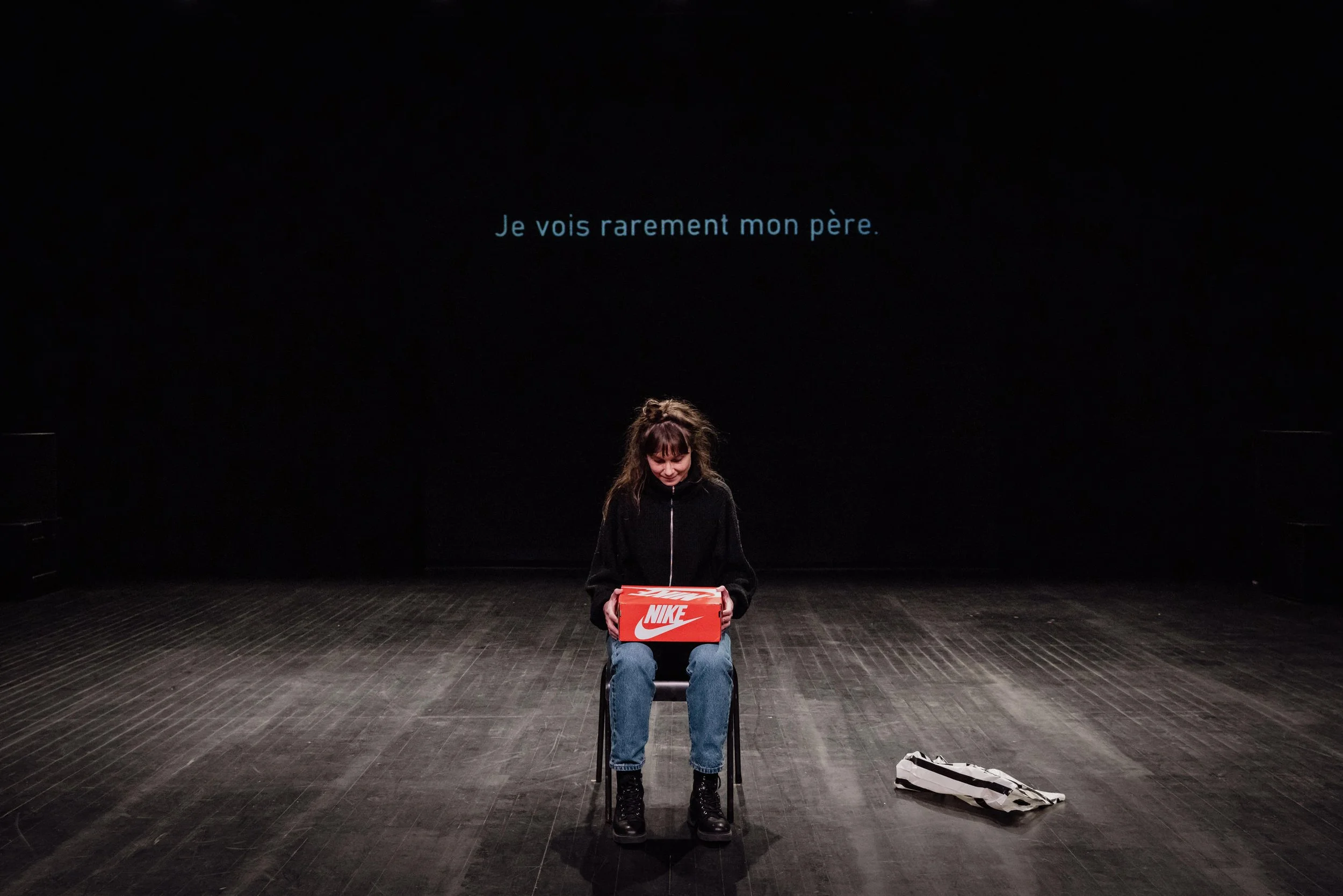
Constance Debré’s Nom. Photo Credit: Simon Gosselin
H: You’ve just spoken to my next question. At the risk of belaboring the point: who is Seuls en Scène for?
F: A lot of our audience are Princeton faculty, Princeton students and staff, and we also extend to our great French community at Princeton because we have, in central New Jersey, a lot of people. They can be from Belgium, they can be from Switzerland. It's a broad Francophone community very willing to discover contemporary forms. They especially appreciate the gesture of bringing live performance and live performers. To see, you know, the actors in the flesh.
H: Would you say that consuming public theater in France remains accessible in ways that theater in the US, seen as a formal event, as you earlier alluded to, hasn’t always?
F: In France, public theater is supposed to be accessible to everyone. The public theater subsidizes audience members. School kids, college students - everyone has a possibility to go to a public theater. But today, at public theaters like La Comédie-Française, the most expensive ticket is easily 45, 46 euros. Things have changed.
Here at Princeton, everything is free. We want to make Seuls en Scène as accessible as possible for the students, the community. It’s the tradition of public theater. And I think it's important.
H:I want to continue with the question of accessibility. The majority of this year’s Seuls en Scène selections are performed in French with English surtitles. Here at French Theater Project, we receive quite a few comments from our audience members, some of whose French isn't quite up to par, and they're grateful we provide surtitles. Others say that the format is unbefitting of the more heady or poetic texts that we bring to the stage.
How do you understand that embedded translation alters - or doesn’t - a piece?
F: It's tricky. For some shows I’ve brought along over the years, the artists specifically did not want to have subtitles because they speak too fast, or because they improvised. Sometimes subtitles are not suitable.
We don't do it systematically for every show, but we try as much as we can. This year, two thirds of the show are accessible to English speaking speakers, either with subtitles or completely in English. It’s a gesture of accessibility because it says to American audiences who may not speak French too well: You're welcome to participate.
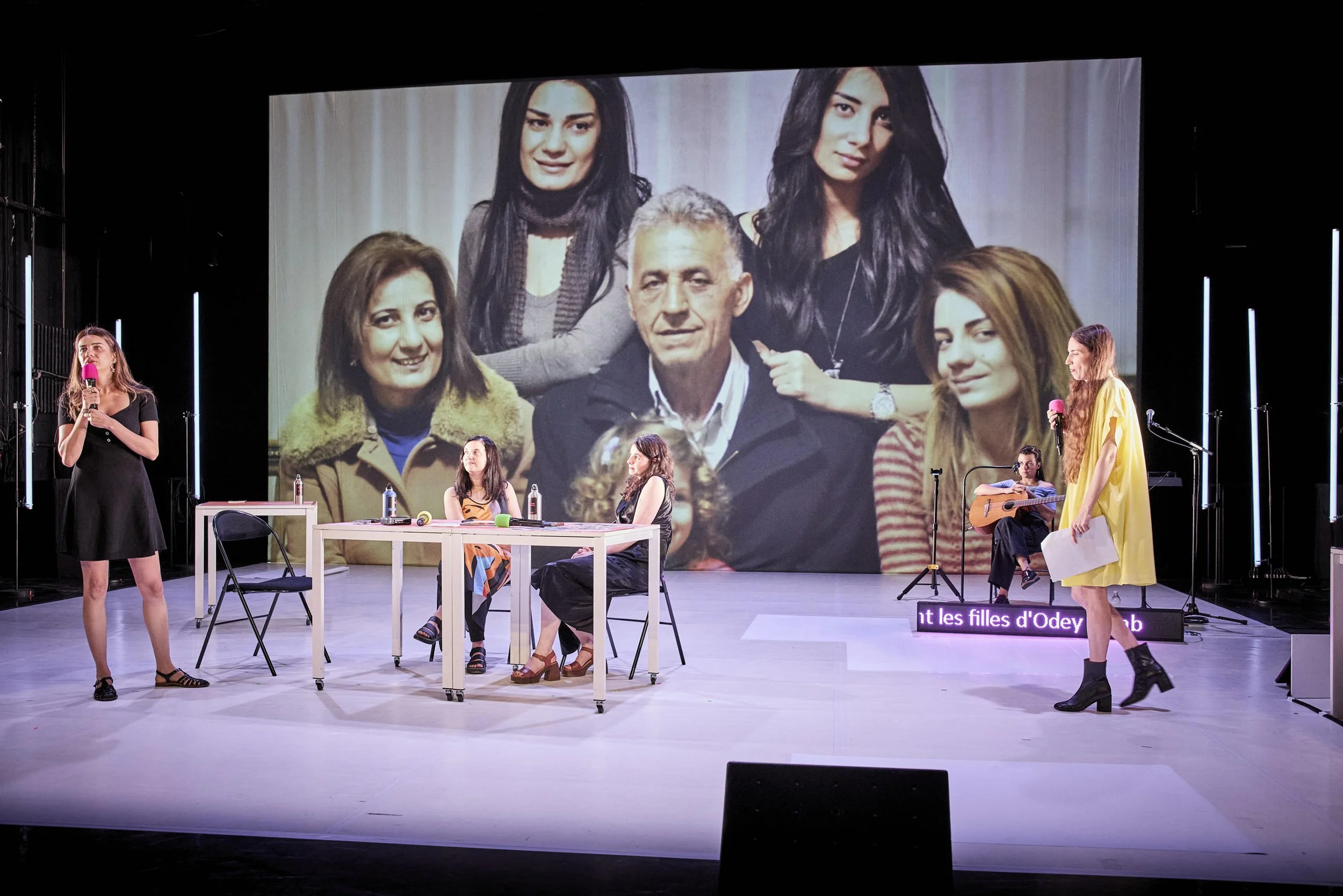
From Vivantes. Photo Credit: Christophe Raynaud de Lage
H: Your recent class offerings have emphasized theater making in the age of climate change and the performance of race in French theater. Last month in Avignon, I saw Tim Etchells’s Everything Must Go about our dystopic AI-hobbled future.
What are the major preoccupations of some of the works you’re bringing to Seuls en Scène this year?
F: I would like to talk about Radio Live’s Vivantes, a show that was a part of the official Avignon In festival last year. It's almost like documentary theater, or a radio show but in a stage version. It’s wonderful because in the show we get to interview these people who have gone through very difficult times growing up in places of conflict, whether it's Syria, Bosnia, or Ukraine.
Students usually respond well to these types of shows. They have a great interest in international relations, geopolitics.
At the same time, we are also a department of French and Italian, and we’re featuring several productions of texts, important texts, from writers of the contemporary. I'm thinking about Annie Ernaux’s L'Evénement, or Nom by Constance Debré.
I'm also excited about the play Génération Mitterrand, which is the generation when I grew up, because it's also an electoral year in France. We were sure to commission surtitles for this one. It’s important to offer them.
H: I have to flag Pascal Rambert’s Losing Your Bag, which I understand is about a woman with a master’s degree who must earn her way as a window cleaner, and she’s angry about it. That strikes me as a compelling choice to stage at a prestigious university at a moment when it seems like every week major newspapers publish an opinion piece presaging the end of humanities education.
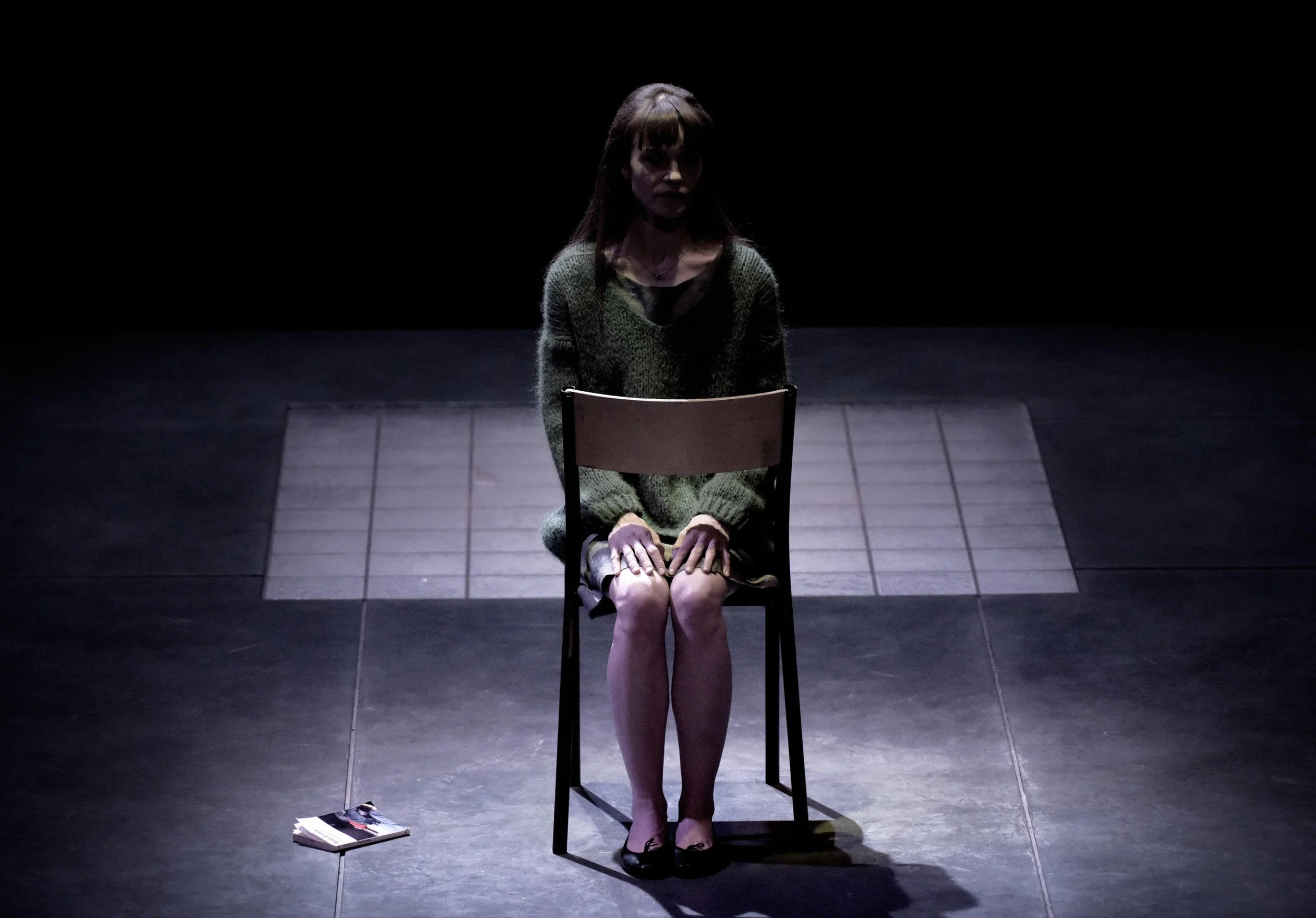
Annie Ernaux’s L’Evénement. Photo Credit: Vincent Pontet
You also lead L’Avant-Scène, a workshop series for Princeton undergraduate and graduate students combining linguistic and dramatic training. You’ve previously stated that theater is a great tool for language learning because theater allows students to experience a foreign language in their entire body.
How so?
F: If you play a chevalier or a marquise in a play by Marivaux, how is your body moved by the culture? My students learn how to be more European or French in the way they walk, in the way they talk. You experience a culture, a language in your entire body because you're not just speaking, you know, in a classroom and conversing with a professor. You're standing up. You're embodying a character.
At the same time, I'm also very interested in the point of meeting between two cultures because my students are still Americans, or they're coming from all over the world. It’s interesting what they bring from their own culture to these French texts. So, in other words, you have a new éclairage, a new way of understanding Marivaux thanks to American undergrads.
These American undergrads or grad students, they make you discover Marivaux - or Feydeau, or the poetry of Jean Racine, or so many other texts - differently.
—
Seuls en Scène is open to the public and runs September 18-26th on the Princeton University Campus. All performances are free with advance tickets required. You can reserve tickets through University Ticketing.
Tous mes remerciements à Professeur Masse d’avoir accepté de me parler.
